

As a responsible provider of architectural services, green belt specialists believe that the long-term future of their architectural practice is best served by respecting the interests of all their stakeholders. Green belt architects have generally worked on listed buildings, in conservation areas, city centres, the suburbs and green belt. They are committed to helping clients maximise their opportunity of low energy design, reducing operational and lifetime cost in every project they do. Their work enhances daylight, sunlight and space in every building they design. Green Belt is established by policy, through development plans prepared in the context of national planning policy. It is not established by legislation though often misconstrued as a legal designation, and is different in this respect from National Parks or Area of Outstanding Natural Beauty. The re-use of buildings can have a number of benefits and will usually not result in a greater impact on the Green Belt. Careful consideration needs to be given to the nature of the proposed use to ensure that the activity it would generate does not result in an impact on the openness of the Green Belt or other forms of impact. Green belt architectural businesses believe that great design should be available to everyone. Clients enjoy working with them because they listen, they're professional and they're great communicators. Most councils do not remove your permitted development rights if you are situated in a green belt. However, individual areas can be protected further, by means of special land designations such as conservation areas and article 4 directions.
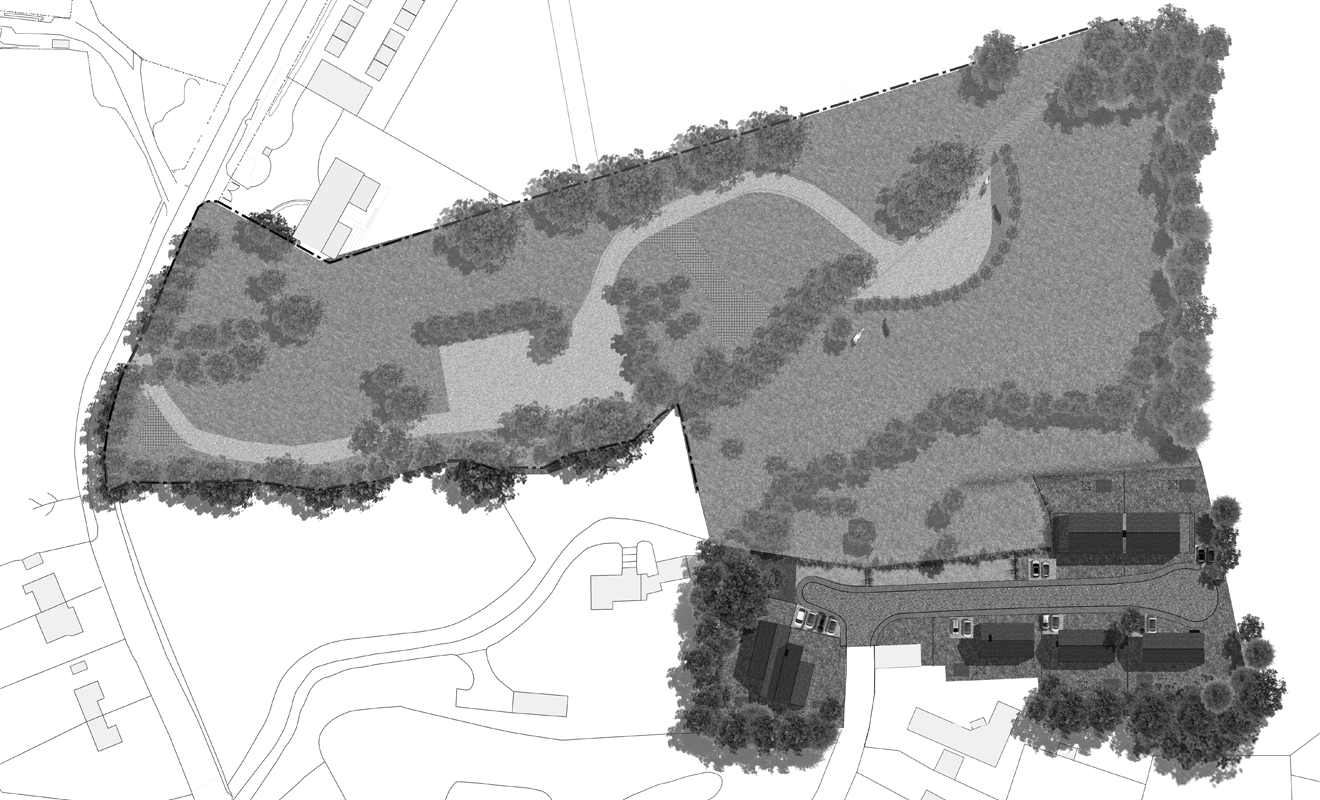
Compared with the rest of England, Green Belt has less open access land but a greater share of some types of recreational resource including Country Parks, Public Rights of Way, National Cycle Network and Local Nature Reserves. People use Green Belt land for informal recreation and value it for the openness it provides. Designers of homes for the green belt have a particular interest in working with existing structures by creating contemporary architecture that enhances the site's historic environment. It is essential that all applications for planning permission for new occupational dwellings in the green belt are scrutinised thoroughly with the aim of detecting attempts to abuse (e.g. through speculative proposals) the concession that the planning system makes for such dwellings. Architects specialising in the green belt realise how crucial it is to communicate ideas efficiently in the changing world of planning and design, therefore their architectural design services team provides realistic 3D visualisations which portray every part of a property, allowing you to view a proposed scheme prior to the work actually taking place. Thanks to justification and design-led proposals featuring Net Zero Architect the quirks of Green Belt planning stipulations can be managed effectively.
Sustainable Development
Regardless of how beautiful and functional a building may be, it has no meaning unless it is safe. Providing safe structures and mechanical and electrical systems is essential. By devolving decisions on Green Belt release to district councils, it is unlikely that a radical approach to rethinking the Green Belt will ever take place. In such a context so-called NIMBYism is completely understandable. Any councillors brave enough to take on the challenge are unlikely to remain in office for long. The media might paint Britain as a land of pavement and urban sprawl, but in fact, the opposite is true. Britain is still a green and pleasant land without vast swathes of concrete. Only 10.6% of England is actually built upon, and if you take the whole of the UK, this figure drops further to 6.8%. It is clear that the Government attaches great importance to Green Belts. The fundamental aim of Green Belt policy is to prevent the uncontrolled spread of urban areas by keeping land permanently open. The essential characteristics of the Green Belt are its openness and its permanence. The green belt’s ethos is one of openness and greenery. The addition of any building is innately not open nor green. Hence, it can be very difficult – but by no means impossible. Formulating opinions on matters such as GreenBelt Land can be a time consuming process.
Building a new home in the countryside is a dream for many but the planning laws make it a very difficult venture to pursue. However, there is an exception cause in the planning law that can offer a glimmer of hope in making building in a rural area a reality. Ministers have repeatedly been clear that demand for housing alone will not justify changing green belt boundaries. Councils are already expected to prioritise development on brownfield sites with 90 per cent of brownfield sites expected to have planning permission by the end of this parliament. The green belt is protected areas of rural land where the building of new homes and businesses is only allowed in special circumstances. Its supporters say green belts have preserved landscapes across the country, while critics claim they protect the rich, stop houses being built and encourage commuting by cars. Older houses in the rural area may no longer meet the standards for modern living in terms of the basic amenities within the house. They may have fallen into a poor state of repair, become dilapidated or been affected by serious structural defects. Further, some houses are inappropriately located or are of a form, construction or appearance that is not in keeping with their surroundings. As a result they may detract from the appearance and the landscape setting of the countryside and whose removal would be beneficial to the surrounding area and the landscape. Identifying the scope for compensatory improvements for green belt land is likely to require early engagement with landowners and other interest groups, once the areas of land necessary for release have been identified. Research around New Forest National Park Planning remains patchy at times.
Buildable Potential
Some forms of green belt development can threaten biodiversity but development can also contribute positively towards the protection and enhancement of biodiversity. Opportunities can vary from retaining existing vegetation to providing new planting of native trees and shrubs; ensuring that watercourses are protected and taking measures to protect individual species. The effectiveness of green belts differs depending on location and country. They can often be eroded by urban rural fringe uses and sometimes, development 'jumps' over the green belt area, resulting in the creation of "satellite towns" which, although separated from the city by green belt, function more like suburbs than independent communities. Clients will benefit from the combined experience and input of green belt architects, all working together to achieve the best results for their clients, with every project, large or small, having Director involvement. Some architects have the knowledge and experience to help you with plans to develop your land and buildings in any rural context. They may have a particular track record in supporting clients with gaining green belt planning permission, farm diversification and prior approval applications for agricultural buildings. Without the Green Belt designation it is likely that a proportion of land would have been lost to urban development and associated infrastructure. Green Belt landscapes have been fragmented by development in a number of locations over time, however, and there may be a correlation between this and the relative lack of large and/or nationally important nature conservation sites. Local characteristics and site contex about Architect London helps maximise success for developers.
If you seek the correct advice from a good planning consultant and an architect specialising in green belt development of homes, you may be able to compile an effective application and build on the land. If you are planning to rebuild houses for agriculture and forestry workers; under special circumstances where workers are required to live in a certain place, for animal welfare, for example, buildings can be erected on Green Belt. Green belt architects have gathered considerable experience in providing planting plans, advice and designs for sites with specialist requirements. This could be due to the restrictions imposed by known archeology, historical significance, health and safety legislation, the way a site is to be used or the requirements of a particular group using it. Green belt architectural consultants specialise in sustainable urban design, architecture and energy. Their definition of a sustainable project is holistic: the economic and social viability of a project is of equal importance to its environmental credentials. Architects that specialise in the green belt believe that good design is generated by a thorough analysis of how the spaces they create will be used; whether this is for living, working, shopping, eating or relaxing. You may be asking yourself how does Green Belt Planning Loopholes fit into all of this?
Permitted Development In Green Belt
Planning and Architecture consultants can offer a high level of professional service in both Town Planning and Architecture and this can be supported by their twin accreditation as a Royal Institute of British Architects (RIBA) Chartered Practice and as Royal Town Planning Institute (RTPI) Chartered Town Planners. It is a myth that the Green Belt is sacrosanct. Many farms and rural business lie within the Green Belt, this does not prevent them developing their homes and businesses and obtaining planning permissions for this. The construction of a building can drastically reduce the ecological and hydrological function of the land in which it’s built upon, and so a sustainable building should look to minimise this and reduce those impacts. One can uncover extra intel regarding London Green Belt Architects in this Wikipedia web page.
Related Articles:
Extra Information About Architectural Designers
[url=https://forum.daslight.com/viewtopic.php?f=4&t=8893
]Further Information With Regard To Green Belt Planning Consultants[/url]
[url=https://www.tdedchangair.com/webboard/viewtopic.php?t=34622
]Further Insight On Green Belt Architectural Designers[/url]
[url=https://forum.chainide.com/topic/10272/green-belt-architects
]More Findings About Green Belt Architects[/url]
Supplementary Insight With Regard To Architects Specialising In The Green Belt
[url=http://smf.racingweb.net/index.php?topic=2053324.0
]Extra Findings About Green Belt Architectural Designers[/url]
[url=https://www.adflyforum.com/viewtopic.php?f=23&t=136525&sid=1d31f897d755ba9c2423721bab56657f
]Extra Information On Green Belt Architects[/url]